
After roughly two weeks of use, it becomes clear that Samsung designed the Galaxy XR to push mixed reality closer to a practical consumer product rather than a novelty or development platform.
The device aims to deliver a simple promise: large virtual displays anywhere, a flexible multi-screen workspace without physical monitors, and an immersive entertainment experience that feels private and cinematic.
The real question is not whether the hardware is impressive—it is whether it integrates naturally into daily routines often enough to justify the cost, setup friction, and requirement of wearing a headset.
What Samsung Is Selling With Galaxy XR
At its strongest, Galaxy XR is about convenience. It creates a large-screen environment without requiring a physical display, while also enabling multiple virtual windows arranged in space.
This makes it appealing for people in small living spaces, frequent travelers, or users who move between environments and want consistent digital workspace access without carrying extra hardware.
It also solves a very straightforward problem: more screen without more physical clutter. That clarity of value proposition matters for mainstream adoption.
Comfort Is the First Hurdle
For XR to become mainstream, comfort is not optional—it is decisive.
If a headset feels heavy, generates heat, or creates facial pressure, it quickly shifts from an everyday device to an occasional-use product.
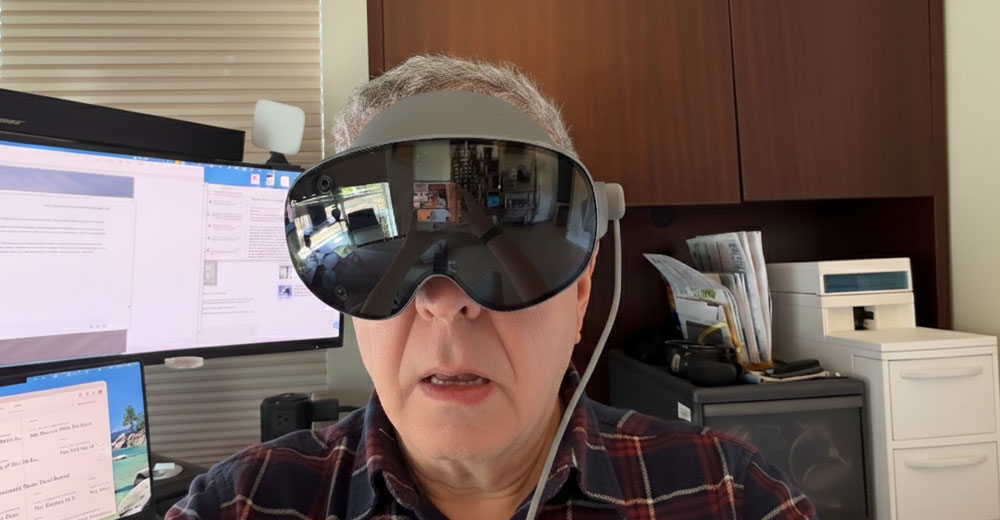
The Galaxy XR improves noticeably over earlier premium headsets in terms of balance and wearability. Extended sessions are more tolerable, and weight distribution feels more refined.
Still, it remains a head-mounted device. Over time, pressure points can develop, particularly for users wearing glasses or those engaged in long continuous sessions.
For comparison, the Galaxy XR weighs 545 grams, plus a 302-gram external battery, while the Apple Vision Pro sits in the 600–650 gram range (with some configurations and accessories reaching higher), plus a 353-gram external battery.
Display Is the Strongest Selling Point
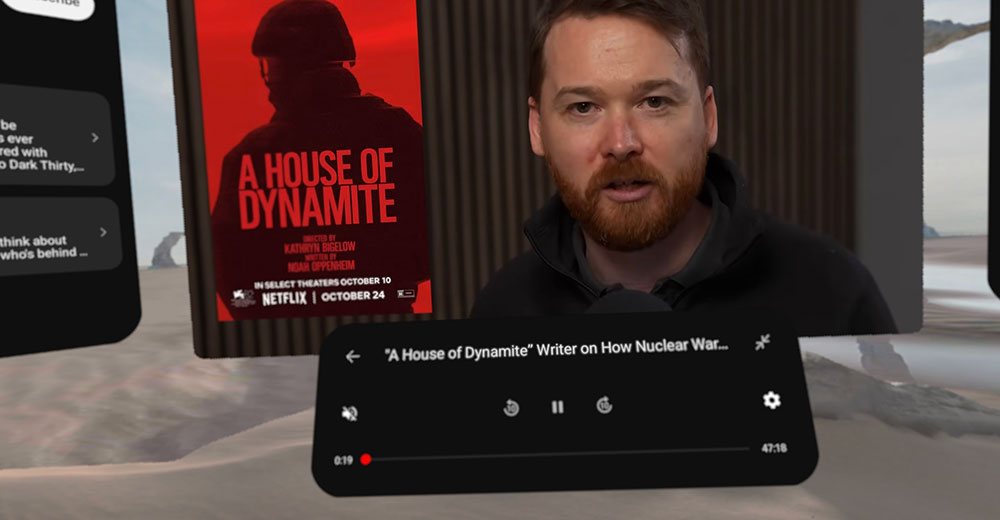
The clearest advantage of Galaxy XR appears when it is used as a virtual cinema or multi-monitor workspace.
Text clarity is sufficient for productivity tasks, web browsing, and document work. Media consumption is where the device feels most compelling, with large-scale visuals that can easily outperform tablets or laptops in immersion.
This “instant wow factor” is important because it is immediately understandable. Most users do not need training to appreciate the appeal of a private, wall-sized screen.
Passthrough Makes It Functional
Mixed reality only works if users can remain aware of their physical environment.
Galaxy XR’s passthrough system is functional enough to support basic real-world interaction—glancing at objects, handling devices, or speaking with others without fully removing the headset.
However, the experience still feels mediated through cameras rather than natural vision. Over longer sessions, this subtle separation can create fatigue for some users.
Controls Feel Futuristic — Until They Don’t
The system relies heavily on hand tracking, eye tracking, and voice input. When it works well, interaction feels fluid and almost invisible.
But mainstream users are not tolerant of input errors. Misinterpreted gestures or selection inaccuracies can quickly break trust in the system.
For that reason, Samsung also includes controllers, which remain the most reliable input method for precision tasks such as gaming or detailed interaction.
The trade-off is clear: controllers improve accuracy but reduce the sense of frictionless interaction that defines the XR promise.
The App Ecosystem Still Needs Breakthrough Experiences
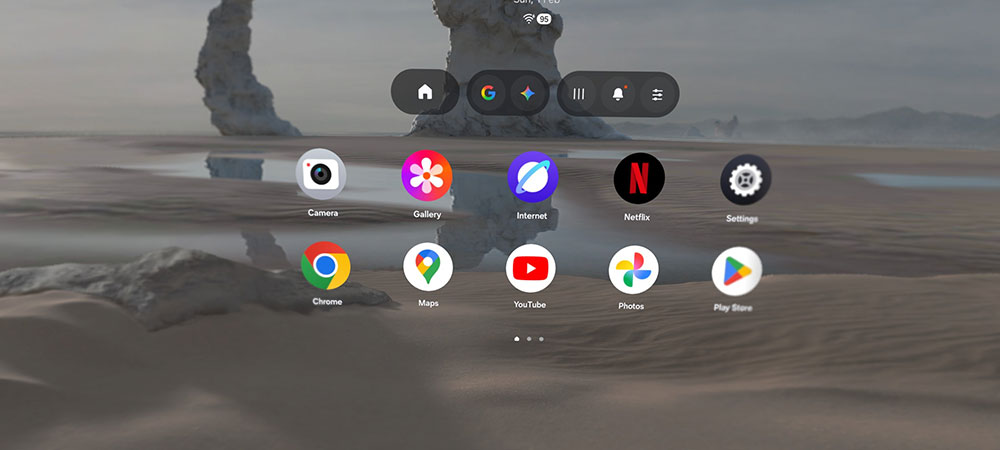
Galaxy XR benefits from compatibility with existing applications, which avoids the “empty platform” problem seen in earlier XR devices.
However, compatibility is not the same as transformation. Most apps are still adapted flat interfaces rather than experiences designed specifically for spatial computing.
What the category still lacks are applications that fundamentally change user behavior—software that makes traditional screens feel limiting rather than sufficient.
Even major ecosystems have struggled to produce a definitive “killer app” moment that drives mass adoption in the way earlier computing revolutions did.
AI Could Be the Bridge to Mainstream Use
Samsung positions AI as a core layer of the XR experience, and this may be one of the strongest long-term arguments for the category.
In theory, AI reduces friction by enabling natural interaction—summarizing content, launching tasks, navigating interfaces, and acting as a contextual assistant embedded in the environment.
However, most users already have AI assistants on their phones. For XR to justify itself, AI must be meaningfully more powerful in this context, not just more accessible.
That advantage would likely come from spatial awareness and hands-free interaction rather than feature parity.
Battery and Tether Still Shape Behavior
At a starting price of $1,799, Galaxy XR is positioned significantly below the Apple Vision Pro ($3,499), which helps its relative competitiveness.
However, the external battery pack still introduces behavioral constraints. Users naturally begin planning sessions rather than treating the device as a continuous all-day tool.
Charging cycles, cable awareness, and physical management all introduce friction that mainstream consumer electronics have largely eliminated.
This does not break the experience—but it limits how naturally it fits into daily routines.
Price Helps, but Comparison Still Matters
Even at a lower price than Apple’s headset, Galaxy XR competes with an entire ecosystem of alternative spending choices: TVs, laptops, tablets, smartphones, or simply not buying anything.
It also competes with habit. Watching TV on a couch or working on a laptop is deeply familiar and frictionless. Any XR device must deliver a clearly superior experience—not just a novel one.
Who Galaxy XR Is for Today
At present, Galaxy XR is most compelling for a few specific groups:
Frequent travelers who want a private large-screen environment in hotels or transit
Users in small living spaces who want multi-monitor setups without physical hardware
Remote workers seeking portable productivity environments
For these users, XR can feel less like a novelty and more like a situational upgrade.
The Core Question XR Still Has to Answer
Galaxy XR demonstrates that the hardware problem is largely solvable. The device is capable, relatively comfortable, and increasingly refined.
The remaining challenge is not engineering—it is behavioral.
The category still needs to prove that everyday use cases exist where XR is not just better, but compelling enough to replace existing habits. That means competing directly with televisions, laptops, and smartphones on convenience, not just capability.
Until that shift happens, XR risks remaining an impressive but optional experience—something users admire rather than depend on. The broader challenge for both Samsung and Apple is the same: turning mixed reality from an occasional demonstration into a daily necessity.