
Since their initial rollout in 2024, AI PCs have struggled to gain strong traction with mainstream consumers. Microsoft now appears to be betting on a new push—this time with Nvidia playing a central role.
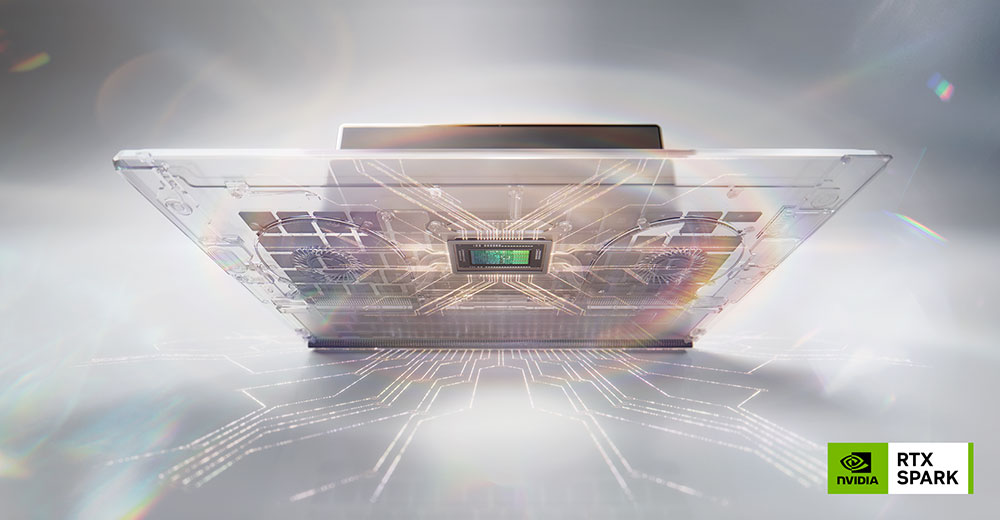
The two companies announced on Monday that they will release around 30 laptops and 10 desktop PCs this fall built around Nvidia’s new RTX Spark “superchip.” The chip is designed to deliver up to one petaflop of AI performance and supports 128GB of unified memory.
Jeff Fisher, senior vice president of Nvidia’s personal computing division, described the initiative as part of a broader shift in computing: “Nvidia and Microsoft share a vision that agents are the future of personal computing.” He added that RTX Spark combines Nvidia’s full technology stack with Microsoft Windows and is aimed at creators, gamers, and AI developers.
Nvidia CEO Jensen Huang framed the change more directly: “The PC is being reinvented. For 40 years, you launched apps. Click. Type. With RTX Spark and Microsoft Windows, you ask — and the PC does the work.”
The new systems, based on Arm architecture, are primarily aimed at developers and creators rather than mainstream consumers.
Microsoft’s Pavan Davuluri said in a Windows blog post that modern users need machines capable of handling graphically intensive workloads and running AI models locally, along with secure environments for agent-based computing.
He emphasized that the combination of Microsoft’s Windows ecosystem and Nvidia’s hardware would produce systems designed specifically for the “personal AI era.”
‘Won’t be cheap’
While pricing has not been officially announced, expectations are that the new systems will be significantly more expensive than premium consumer laptops.
Tech journalist Michael Kan of PC Magazine noted that RTX Spark appears closely related to Nvidia’s DGX Spark mini-PC platform used for AI development. The key difference is that RTX Spark targets consumer PCs running Windows 11, while DGX Spark uses a custom Ubuntu Linux environment.
For context, DGX Spark systems reportedly range between $3,499 and $4,699 depending on configuration, suggesting RTX Spark devices will likely sit at the high end of the market.
Microsoft is also expected to release its own high-end device, the Surface Laptop Ultra, which insiders describe as its most powerful PC yet—another signal that pricing will not be entry-level.
Analysts suggest the first buyers will likely be developers, AI researchers, and enterprise users rather than general consumers.
A shift toward local AI computing
Industry analysts say the announcement reflects a broader strategic shift toward running AI workloads directly on personal devices rather than in the cloud.
Mark N. Vena of SmartTech Research said RTX Spark represents a move to bring meaningful AI computation into local hardware rather than relying solely on data centers. He noted that this shift fundamentally changes what PCs are expected to do, moving beyond traditional productivity tasks.
Brian Colello of Morningstar added that Nvidia’s expansion into PCs positions it directly against long-standing CPU leaders like Intel and AMD. He also noted that Nvidia continues to maintain partnerships in existing PC architectures while simultaneously building its own platform presence.
Arm architecture and competitive pressure
RTX Spark is also notable because it signals Nvidia’s deeper push into Arm-based computing, a space already used by Apple and increasingly explored by Qualcomm and Microsoft.
Analyst Jeremy Roberts of Info-Tech Research Group said Arm chips are generally more power-efficient than traditional x86 processors, making them well-suited for AI-heavy workloads and battery-sensitive laptops.
However, industry observers also caution that shifting to Arm introduces potential compatibility challenges, particularly in early product generations.
Rob Enderle of the Enderle Group pointed out that while companies like Qualcomm have had more time to refine Arm-based PC ecosystems, Nvidia and its partner MediaTek are relatively new to the CPU side of the market. That could create early software and compatibility friction.
He also noted that Nvidia’s move into full PC systems is strategically important because competitors like AMD, Intel, and Qualcomm already operate across both CPU and platform layers. Without a direct PC presence, Nvidia risks losing influence in the evolving AI computing stack.
Strategic expansion for Nvidia
Some analysts view RTX Spark as a natural extension of Nvidia’s broader roadmap. Jack E. Gold of J.Gold Associates noted that Nvidia has been developing Arm-based CPU capabilities for its data center products and is now scaling that expertise into personal computing.
He described the move as a logical evolution, but also emphasized that the AI PC market remains relatively small compared to Nvidia’s dominant data center and cloud business.
Even if successful, analysts expect AI PCs to represent only a limited share of Nvidia’s revenue in the near term, as enterprises are likely to adopt new architectures cautiously until they are fully proven at scale.
Outlook
RTX Spark marks a clear attempt by Nvidia and Microsoft to reposition the PC around local AI execution rather than traditional application workflows. While early adoption is expected to be limited to technical users and enterprises, the broader ambition is to redefine what personal computing looks like in the age of AI agents.
Whether that vision reaches mainstream consumers will depend on cost, compatibility, and whether local AI workloads can deliver enough practical value to justify a new generation of hardware.